

Welcome back to From the Republics: The Longread, where we explore the culture, politics, and society of Russia’s ethnic republics and Indigenous communities in depth.
This week, we are zooming in on the controversy surrounding Russian opposition figure Vladimir Kara-Murza whose speech at the French Senate has been the center of discussion in Russia’s Indigenous and decolonial activist circles over the past few days.
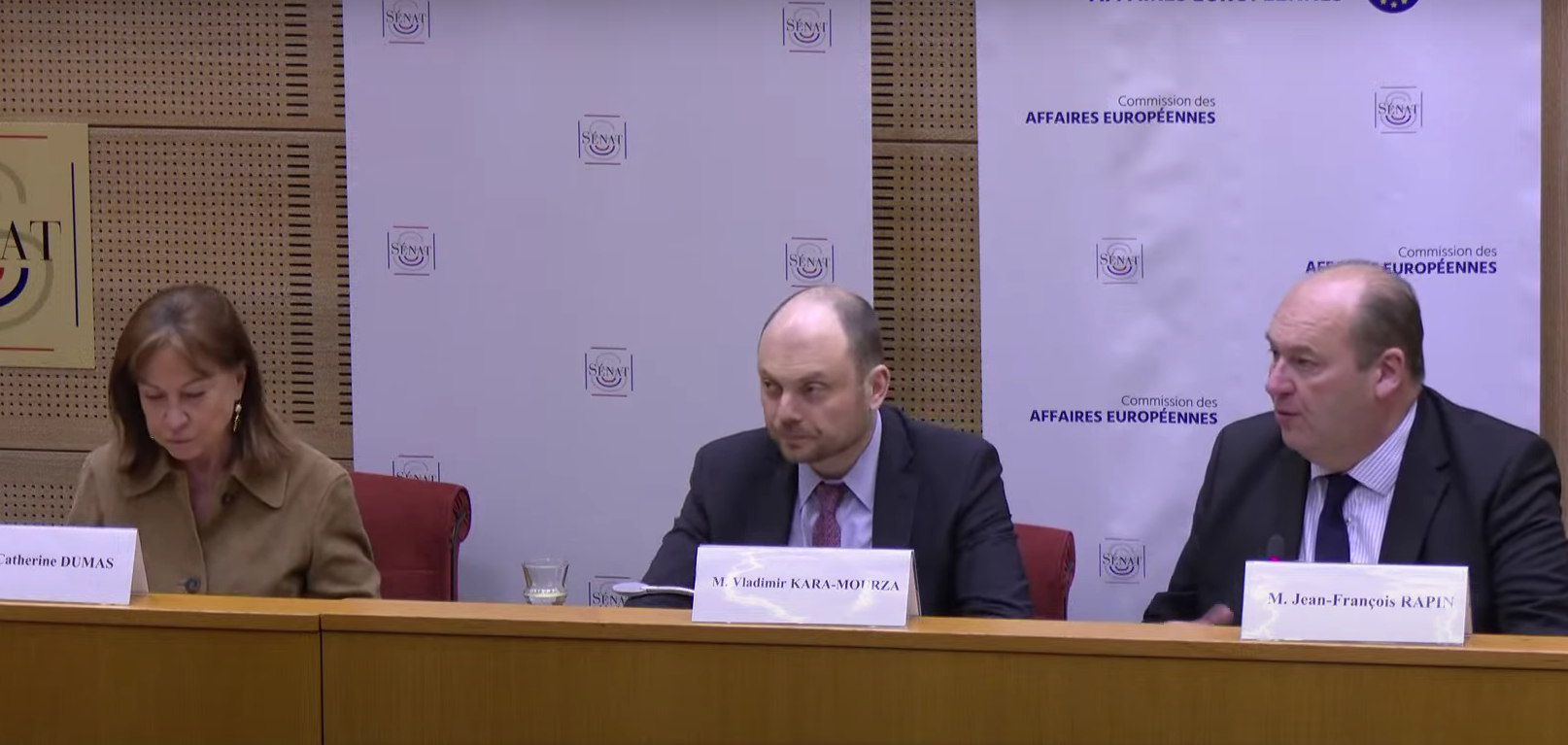
Kara-Murza, a former political prisoner released in the historic swap between Russia and the West last August, spoke before the French Senate on 10 April 2025.
When Senator Claude Malhuret asked him about the disproportionately high number of casualties among ethnic minorities in the Russian military, Kara-Murza responded with a controversial, unverified claim.
“I spoke with a colleague who works extensively with prisoners of war on both sides. So she had spoken a lot with Ukrainian prisoners of war who had been released from Russia, and with Russian prisoners of war who are still in Ukraine. And she told me there’s another reason why Russian Defense Ministry recruits so many representatives of these national minorities — because, allegedly, they say it’s psychologically really difficult for Russians to kill Ukrainians. Because it is… Because we are the same… We are the same, these are very closely related peoples, as everyone knows. We have almost the same language, the same religion, centuries and centuries of shared history… But if it’s someone who comes from another culture, allegedly, it’s easier. That’s what this colleague told me yesterday. I had never thought of it that way. For me, it was mostly about economic reasons, but since she told me that yesterday, I’ve started thinking about that too.” — Vladimir Kara-Murza, speaking at the French Senate on 10 April 2025
Kara-Murza’s remarks triggered a wave of backlash last weekend. First, individual Indigenous activists posted critical responses on their social media. Then, on 13 April, an open letter signed by dozens of organizations and activists — including Indigenous of Russia, Free Yakutia Foundation, and the anti-war movement New Tuva — was released. The letter condemned the statement in strong terms.
“As representatives of Indigenous peoples and ethnic minorities, we are outraged that the so-called ‘liberal’ voices of Russian politics continue to reproduce racist and dehumanizing narratives about us. […] In such statements, we recognize the same colonial logic employed by the Kremlin, as well as an attempt to absolve ethnic Russians of responsibility for the war crimes committed by the Russian army. These remarks reinforce the public perception that only ‘non-Russian barbarians’ commit atrocities in Ukraine. Given that liberal, anti-Putin politicians today have a significant platform, their racist statements shape public opinion and amplify racist tendencies within society.” — Excerpt from an open letter by Indigenous organizations and activists from 13 April 2025.
What are Kara-Murza’s supporters saying?
The main argument presented by Kara-Murza’s defenders is that he wasn’t expressing his own view but rather quoting someone else’s opinion.
“He was recounting another person’s words regarding the alleged intentions of the Russian authorities. To attribute those views to him personally is absurd,” human rights lawyer Sergei Davidis wrote on Facebook.
Human rights activist Anastasia Shevchenko confirmed that she was the colleague that Kara-Murza cited in his speech.
“I wouldn’t even remember our conversation if it hadn’t been mentioned by Vladimir [Kara-Murza] in the French parliament. I understand it sounded ambiguous and offended many people. I would also debate [this move] with him next time we meet, and I’m sure we will,” Shevchenko wrote on Facebook.
“But I’m also confident that Vladimir [Kara-Murza] is one of the most decent and honest politicians. He risked his life advocating for the Magnitsky Act and advocating against the war [in Ukraine], as well as supporting activists, including those from the regions,” she added.
How did Indigenous activists respond?
The collective open letter from Indigenous activists was published after multiple people spoke out in defense of Kara-Murza, so it also addressed the widespread argument that the politician was “merely quoting” someone else.
“Regardless of whose opinion Kara-Murza cited in this excerpt, referencing it in response to a question during an official event implies that he thinks such opinion is legitimate,” the letter stated.
Did Kara-Murza respond?
The opposition politician reacted to criticism only on the evening of 14 April, labeling the controversy around his speech a “fake.”
Someone’s invisible but very skillful hand carefully removed the words ‘allegedly’ and ‘they allegedly say’ from my response, replacing the phrase ‘very close peoples’ with ‘Russia and Ukraine are one people,’ and launched this distorted version across social media. With one deft move, my retelling of the xenophobic logic of the Russian Ministry of Defense was presented as my own opinion, attributing to me Putin’s words about ‘one people,’ which he used to justify his invasion of Ukraine. Unsurprisingly, after such an ‘edit,’ my phrase ‘I also started thinking about it’ could be interpreted as meaning I shared this view. — Excerpt from Vladimir Kara-Murza’s Facebook post from 14 April 2025.
Kara-Murza’s speech was initially only available in French, which prompted various Russian translations to emerge on social media.
Some versions of these translations claimed that Kara-Murza labelled Russians and Ukrainians “one people.” Such a translation appeared in at least two widely shared critical posts, including one by a popular Instagram page “Asians of Russia.”
However, Kara-Murza’s original French words were: “ce sont des peuples très proches,” which is more accurately translated as “these are very close peoples.”
Another key controversy is over Kara-Murza’s use of the word “allegedly” (“apparemment” in French). He used it twice in his speech:
- “…parce que apparemment ils disent que c’est psychologiquement vraiment difficile pour les russes de tuer les ukrainiens…” (“…because, allegedly, they say it’s psychologically really difficult for Russians to kill Ukrainians…”)
- “Mais si c’est quelqu’un qui vient d’une autre culture, apparemment, c’est plus facile.” (“But if it’s someone from another culture, allegedly, it’s easier.”)
Kara-Murza argued that omitting the word “allegedly” from some translations distorted the intended meaning, incorrectly suggesting that he endorsed the viewpoint.
Notably, the version shared by “Asians of Russia” retained the second instance of “allegedly” but translated the first phrase differently: “as it turns out, it really is psychologically difficult for Russians to kill Ukrainians.”
In their open letter, Indigenous organizations and activists used yet another translation, which did not include the phrase “one people.” Instead of the word “allegedly”, this translation used another Russian synonym, “видимо” (“apparently”), in both instances — another valid translation of “apparemment.”
How did Indigenous activists respond to Kara-Murza’s rebuttal?
Kara-Murza’s clarifications did not halt the criticism.
His opponents argued that, despite using the word “allegedly,” he nevertheless used his platform in the French Senate to amplify an unverified and questionable claim without questioning its validity.
“Why would you repeat someone’s unverified third-hand gossip about the imagined thinking of Russia’s Defense Ministry…and then complain that people misunderstood you?” anti-colonial researcher Anna Gomboyeva commented on Kara-Murza’s Facebook post.
Oyumaa Dongak, a human rights defender from Tyva, noted that neither the Russian Defense Ministry nor prisoners of war have ever publicly claimed it is “easier” for ethnic minorities to kill Ukrainians.
“[Anastasia] Shevchenko clearly states in her post: this was a private theory expressed in a conversation. The theory came from your colleagues, but you spread it around,” Dongak commented under the same post.
Buryat activist Victoria Maladaeva criticized Kara-Murza for wasting the opportunity to highlight urgent issues affecting Indigenous peoples, including hundreds of Indigenous and ethnic movements being labeled as “terrorists” by the Russian government and the fate of over 80 Bashkir men and women facing criminal prosecution in the “Baymak case.”
“This racist theory attributed to the Defense Ministry has no factual basis, yet you decided to voice it — and even start to ‘think’ about it. You were asked about the situation in ethnic republics and [Russia’] colonial policies, but instead of highlighting Indigenous peoples’ real problems…you chose to spread misinformation,” Maladaeva responded on Facebook.
If you liked this newsletter, please consider supporting the From the Republics team of volunteers with a one-off donation or become a regular giver by ticking the “make it monthly” box here.