
See the full report in Russian
When Russia launched its full-scale invasion of Ukraine, few outside observers considered the impact this war would have on the Indigenous peoples of the Russian North and Siberia. Yet, as the conflict drags on, it is clear that these small, vulnerable communities are among the most disproportionately affected, paying with their lives in a war that was never theirs.
In a recent conversation with Metro UK, I was asked to comment on the mobilization of Nenets people from the Yamal-Nenets Autonomous Okrug. Their story is exemplified by 19-year-old Dmitry Yaptik from the village of Seyakha, a young Nenets man captured in Ukraine. His participation in the war raises critical questions about how Indigenous peoples are drawn into Russia’s military machine, often with little choice and under immense pressure.
Mobilization in the Russian Arctic
Although official Russian narratives emphasize that Indigenous people serve voluntarily or are exempt from conscription, the reality on the ground is different. In September–October 2022, Russia officially announced the mobilization of 300,000 men, but recruitment of contract soldiers and even prisoners had already been underway from the first months of the invasion. These efforts heavily targeted regions like Yamal, where Indigenous communities live alongside some of Russia’s most profitable oil and gas enterprises.

Despite the region’s wealth, Indigenous peoples remain among the poorest in Yamal. They face high costs of living and limited economic opportunities, often relying on traditional practices like reindeer herding, fishing, and hunting, which do not provide stable or sufficient income. At the same time, government propaganda and promises of high payouts—millions of rubles for signing a contract and substantial compensation in case of injury or death—push Indigenous men toward the frontlines. These sums are extraordinarily large compared to the modest incomes from traditional livelihoods, which barely sustain families under the high living costs of the Russian Arctic. For many, military service becomes the only viable path to financial security, despite the enormous risks.
The government has also created indirect mechanisms of coercion. For example, Indigenous hunters and fishers face growing fines for “illegal” practices, such as fishing in traditional areas without permits. For some, military service has become a way to pay off debts or avoid further prosecution.
Are They Volunteers or Victims?
Formally, many Indigenous soldiers in the Russian army are labeled as volunteers. However, this term is misleading. Economic desperation, systemic discrimination, and limited access to reliable information leave many Indigenous men with no real alternatives. They are the targets of state propaganda, which glorifies military service and downplays the dangers of war, presenting it as an honorable and lucrative path for those with few other options.

Furthermore, the skills many Indigenous men possess—such as survival in harsh conditions, hunting, and handling weapons—make them particularly attractive recruits. This is not just about patriotism or defending the homeland; it is about how the state exploits the circumstances and abilities of its most vulnerable populations.
Tragically, this has led to cases like that of Nikita Molochkovsky, a 20-year-old Nivkh man from Sakhalin. Nikita disappeared in Ukraine, and his family later discovered that his military contract had been forged. Another example is Semion Kiskorov, a 31-year-old Shor man from Kemerovo, who, along with his brother Gennady, refused to fight. For this, they were tortured. Semion’s body was eventually returned to his family, but the circumstances of his death remain unclear. What is known is that he had consistently refused to fight and was subjected to torture. His brother Gennady remains missing.
Another tragic case is that of Anton Komtin, a 30-year-old reindeer herder from the Surgut district of the Khanty-Mansi Autonomous Okrug. He was the sole provider for his family and responsible for a herd of 200 reindeer. In October 2022, he was forcibly mobilized despite his family’s appeals to regional authorities, who asked that he be exempted due to his role as a traditional herder. His sister, Viktoria Komtina, publicly fought for his return, but her requests were ignored. A year later, in October 2023, it was reported that Anton was missing in action. As of March 2024, his family was still searching for any information about his fate.
Many other Indigenous soldiers have been sent to the most dangerous frontline positions and subjected to brutal treatment by Russian commanders, reinforcing their expendability in the military hierarchy. This is not an isolated phenomenon—we have numerous similar cases of Indigenous men being used as disposable soldiers, placed in high-risk combat zones, and facing extreme mistreatment at the hands of military authorities.
The Demographic Collapse of Indigenous Peoples
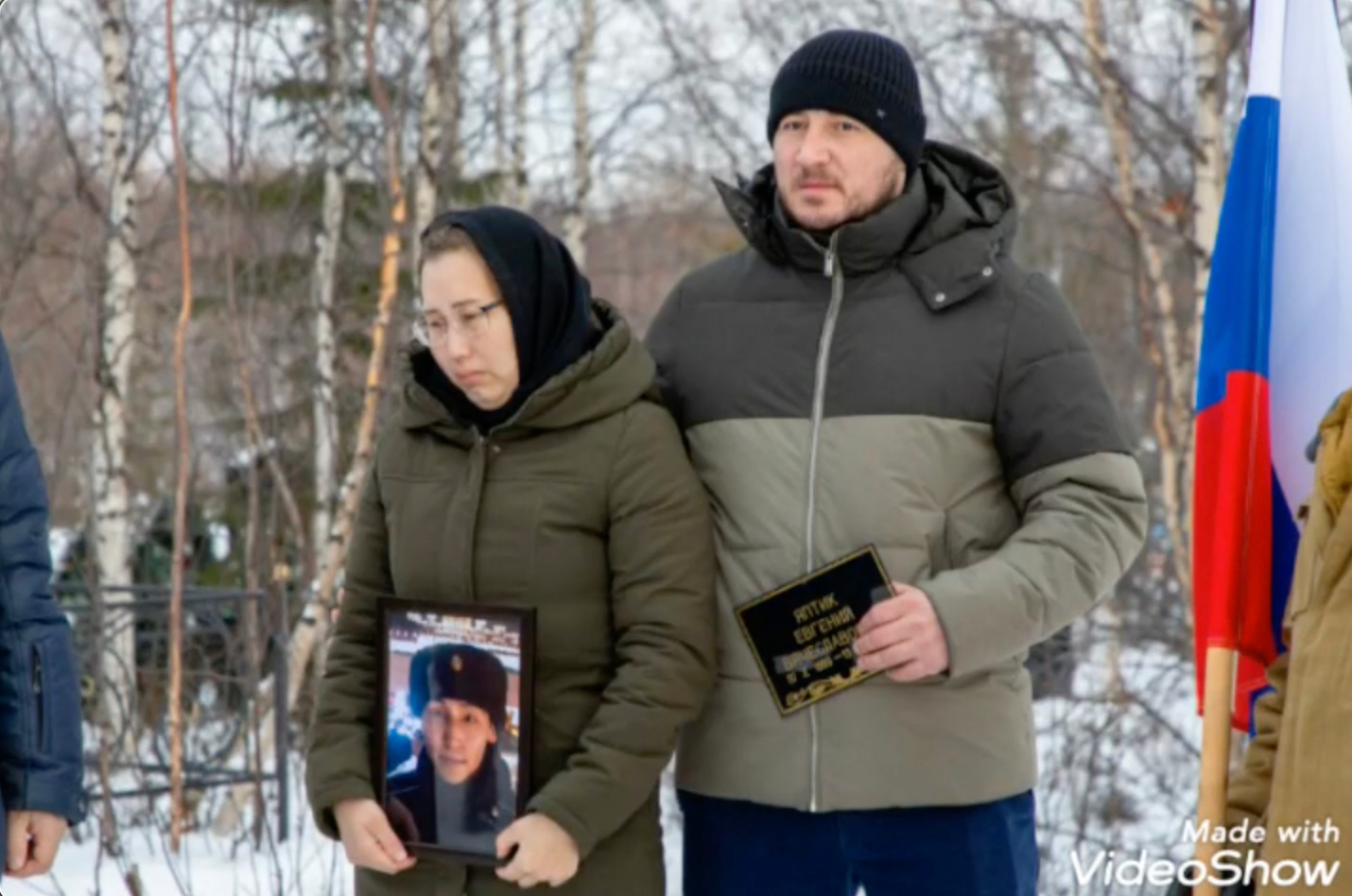
Officially, the Nenets population has shown stable growth in recent decades, according to Russian census data. But these figures mask a growing crisis. The war in Ukraine has already caused devastating demographic losses. Our team at Indigenous Russia has documented hundreds of deaths among Indigenous soldiers, including dozens of Nenets from Yamal. Independent media report even higher numbers.
In Yamal, where Indigenous peoples make up less than 10% of the population, they account for more than half of the region’s confirmed war casualties. This is a staggering figure. For small, isolated communities practicing traditional livelihoods, the loss of even a few working-age men can be catastrophic. Reindeer herding, fishing, and other communal practices depend on the labor of every family member. As men die on the battlefield, families collapse, economies falter, and entire cultures are pushed closer to extinction.

Regions like Chukotka, Yamal, and Tuva stand out not only for the scale of losses but also because these communities are easier to identify through obituaries, social media posts, and local reports. In contrast, Indigenous people living in more assimilated areas, where Russian names are common, may not even be recognized as Indigenous in open sources, further obscuring the true scale of their losses.
Russia’s Denials and International Failure
Despite abundant evidence, the Russian government has presented a very different picture to the international community. In 2023, the UN Expert Mechanism on the Rights of Indigenous Peoples conducted a study on militarization’s impact. Russia claimed that Indigenous people practicing traditional lifestyles were exempt from mobilization and had access to alternative civilian service. This narrative was included in the final UN report, even as firsthand testimony from Indigenous organizations detailing forced mobilization, forged contracts, and rising death tolls was ignored.
Russia actively promotes its version of events in the UN system through figures like Antonina Gorbunova, a member of the UN Expert Mechanism and a representative closely connected to Norilsk Nickel, a corporation whose operations have severely damaged the traditional lands of Indigenous peoples in the Russian Arctic. By leveraging such influence, Russia ensures that its official narrative is embedded into international reports, despite the contradictory evidence presented by Indigenous communities themselves.

This raises painful questions. What would those who voted for this report, endorsing the Russian government’s narrative, say to the families of the Kiskorov brothers or Nikita Molochkovsky? What would they say to the relatives of Anton Komtin, who was taken from his family, declared missing two years ago, and whose fate remains unknown? How can they justify supporting conclusions that ignored the documented evidence of forced mobilization and the suffering of Indigenous communities now losing their young men to the war they never chose?
A War That Threatens the Future of Indigenous Peoples
The war’s impact on Indigenous peoples goes beyond the battlefield. It accelerates the collapse of languages, traditions, and self-sufficient economies already under threat from industrialization and environmental destruction. With every life lost, vital knowledge disappears. Without young men to continue traditional practices, entire ways of life vanish.
This is not just a demographic issue; it is cultural erasure. Russia’s war in Ukraine is also a war against the survival of its Indigenous peoples. And as these communities disappear, so too does the memory of who they were, how they lived, and what they might have become—if only they had been left in peace.
Dmitry Berezhkov, Indigenous Russia editor
7 March 2025